Sunday, 20 October 2013

The costliest medicinal herb of Himalayas - Yartsa Gambu / Cordyceps sinensis

Yar-tsa Gam-bu or the Chinese caterpillar mushroom (Cordyceps sinensis) is the costliest medicinal herb of the Himalayas. It is an entomophagous fungi, Cordyceps sinensis growing on the caterpillar of a moth of the Genus Hepialus. It is collected at an altitude above 3800m during the month of June when the snow melts and the fruiting body of the fungi just emerges out of the soil from the mouth end of the dead caterpillar. Around 3000-4000 pieces makes one kilogram of produce which costs between INR 2.5 lakh to 10 lakhs depending on the grade of produce, demand and supply. 

The main use seems to be by atheletes as the drug is not detected in dope tests. Just before the London Olympics, the rate was upto INR 10 lakhs/kg in the Kathmandu market in Nepal. The trade route is from Kathmandu to Hongkong and then elsewhere in the world. The produce is found throughout the Himalayas in India, Nepal, Bhutan and also in Yunnan and Sichuan province in China. It is also supposed to be a cure-all herb and is widely used in Chinese and Tibetan medicine.

Monday, 29 August 2011

All set for Kangdali festival - SIRKHA VILLAGE

Sirkha village, the centre point of Chaudans valley of Pithoragarh is all set for the Kangdali festival in early October. Kangdali is a herb, Strobilanthes wallichii, which flowers once in 12 years. This bushy herb was once said to be used by attacking Zorawar army of Ladakh to hide from the villagers. The women folk of the village found these soldiers and drove them away by striking the bush with sticks. The incident is still remembered during the festival when women beat and destroy the bushy herb, at least symbolically.
The Chaudans valley consists of erstwhile 14 villages in Dharchula tehsil of Pithoragarh, Uttarakhand, India, which now have split and increased in number. Sosa, Sirdhang, Sirkha, Pangu, Himkhola, Chalmachilason, Pulnabhatka, Rung, Samri, Kurila, Bangpa, Jaikot, Shankhola, Gipti, Tankul, etc. are the major places of importance in this valley.
Most of the population belongs to the Rung community. This valley falls in the traditional route to Kailas Mansarovar trek route through Indian territory.

Thursday, 18 August 2011

VIDEO - ROAR OF THE VALLEY - ASKOTE WILDLIFE SANCTUARY

This is a video of the Umchiya gad, a tributary of Dhauliganga East River in the Askote Wildlife Sanctuary, Pithoragarh, Uttarakhand, India. The stream is roaring in its full strength during heavy rains in the valley. PUT YOUR COMPUTER VOLUME FULL for full effect of the ROAR.

Monday, 25 July 2011

MOST BEAUTIFUL WATERFALL IN ASKOTE WILDLIFE SANCTUARY

This is the Kanjoti waterfalls situated in the Askot Wildlife Sanctuary, Pithoragarh, Uttarakhand, INDIA. It is at an altitude of 1500m near the Dhauliganga river cutting through the greater Himalayas. There is a hydro-electric project also run using the head of this waterfall. The waterfall is at its best during the monsoons from July to September.

Sunday, 24 July 2011

TICKS on ROCK LIZARD

Click on the image to enlarge. You can see that there are a lot of large blue coloured ticks hanging on to the body of the lizard, especially near the eardrum.  This photo is from the Askote Wildlife Sanctuary in the Himalayas in the state of Uttarakhand, India. It is a rock Agama, probably Laudackia tuberculata. Kindly properly identify both the lizard and the tick species if anybody could.

Sunday, 17 July 2011

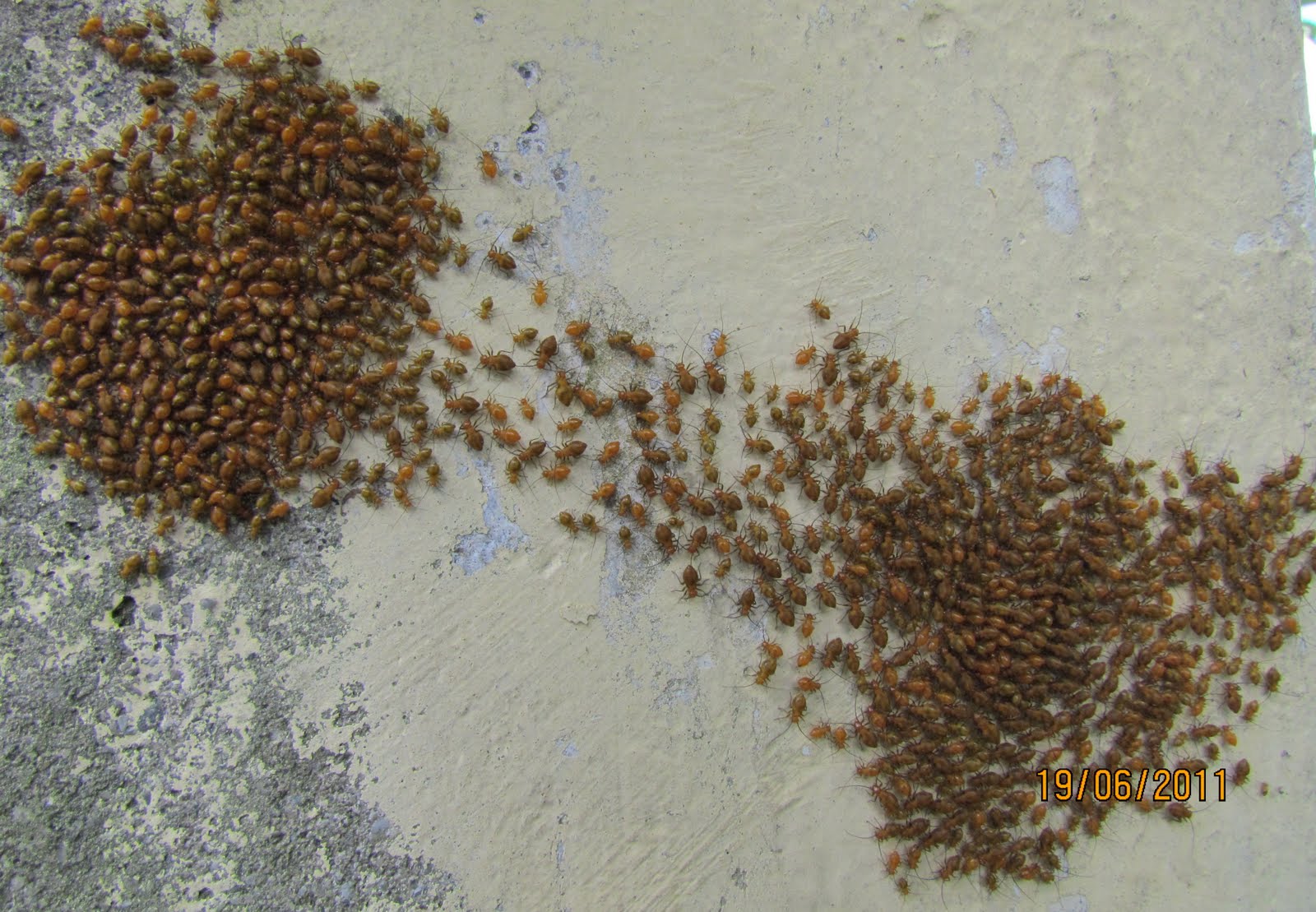
GIANT APHIDS GROUPING AND REGROUPING


BEFORE
AFTER
These bugs (looking like giant aphids) were aggregating and splitting into groups and repeating the process for a long time. Could anybody explain the phenomenon and also identify the species? Some of them had wings too, may be the males.

THE MOST BEAUTIFUL PLACE ON EARTH

Jimba - A rather unexplored subalpine meadow in the Uttarakhand Himalayas
Click on Picture to Enlarge

This is the rather unexplored Jimba meadow in Munsyari Tehsil of Pithoragarh. It is enroute the traditional Kailash route not used nowadays except by the people of Munsyari and Dharchula. It is a two day walk from Sobala near Dharchula or from Bauna near Madkot. The area is rich in Musk deer and Himalayan Black bears in addition to the other diverse flora and fauna.

MATING OF SPOT SWORDTAILS


Mating of Spot Swordtail Butterflies at Senapani in Haldwani Forest Division, Uttarakhand, India
SPOT SWORDTAIL Graphium nomius

Himalayan Biodiveristy and Ecology


Full rainbow from an Himalayan Alpine Meadow
Hai everybody. Kindly follow this blog for updates on Himalayan Biodiversity. This blog will include photos and information on fauna and flora and other components of biodiversity and the supporting ecology and environment.